
Bone and nerve mapped
Volume, density and the inferior alveolar nerve are read from the scan, not inferred.
Dental implants
Dr. Kurpis holds a United States patent for a dental implant and has placed more than five thousand of them. Implants are planned on a three dimensional scan, not estimated from a flat X‑ray.
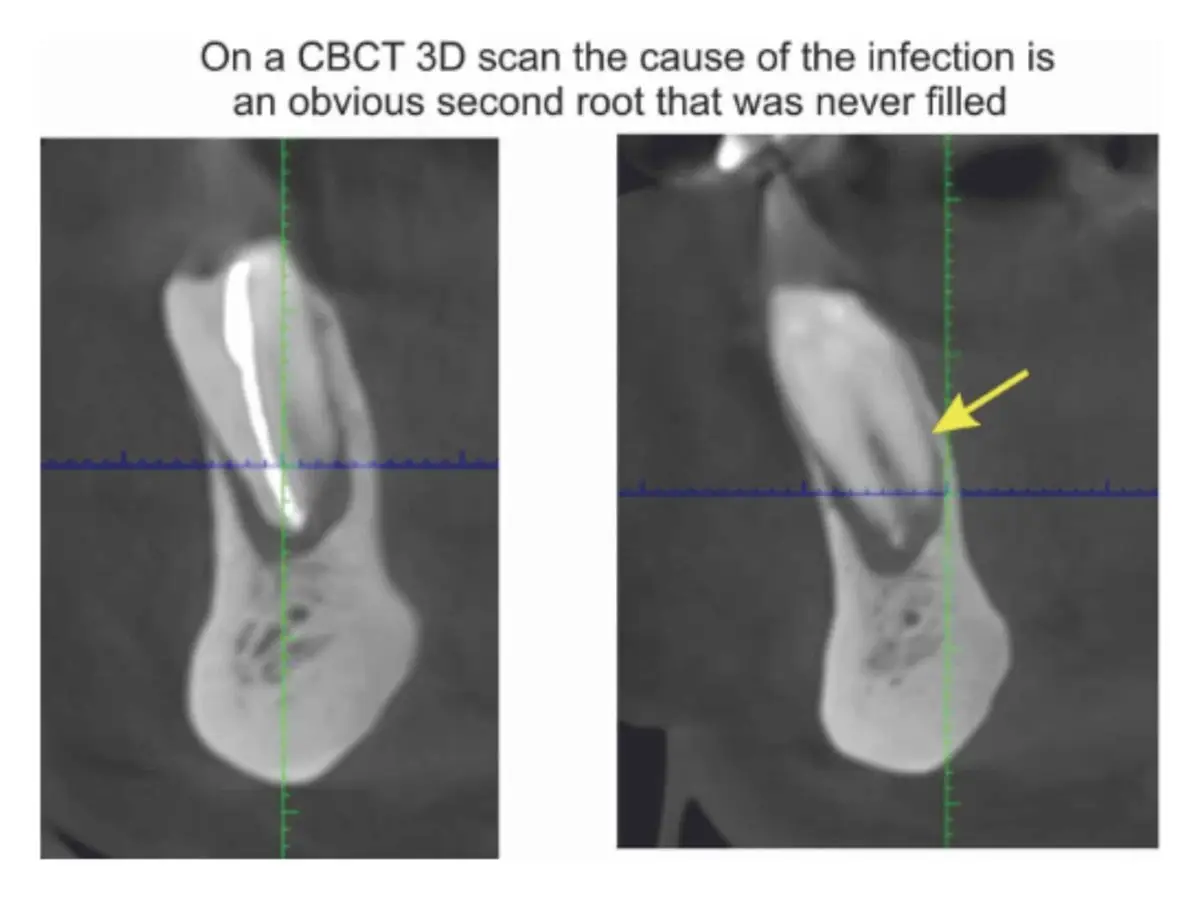
A flat X‑ray flattens a structure that is not flat. A CBCT scan shows bone volume, nerve position and sinus anatomy before anything is placed, which is how a case is judged possible or not.
Volume, density and the inferior alveolar nerve are read from the scan, not inferred.
Metal-free, tissue-friendly, and colour-stable at the gumline where titanium can show through.
Patients report fees roughly 30 to 50 percent below area quotes. Exact cost follows examination.
A question worth asking first
An implant is an excellent replacement for a tooth that cannot be kept. It is a poor replacement for one that could have been. Structural viability, gum and bone stability and bite physics are settled before any extraction is proposed.
Questions
Patients report fees roughly 30 to 50 percent below area quotes. Exact cost follows examination. Financing starts at 0% over twelve months.
Age is rarely the limiting factor. Bone volume, general health and bite mechanics are. All three are assessed at the evaluation.
Fewer than most people are told. The number follows the diagnosis, and a full arch does not automatically require an implant per tooth.
No obligation
The preliminary consultation is free and includes a 2‑D panoramic scan. If the plan you were given was the right one, you will be told so.